


 Share this content
When you are storing valuables at home, a safe is a smart way to keep them secure and out of reach of burglars. The question is, how safe is your safe?
The answer to this question depends on a few factors.
Where is your safe stored?
When installing a safe in your house, first of all, you probably want it to be hidden from sight of unwanted eyes. If burglars don’t know where your safe is, they can’t break into it. Burglars will usually want to be in and out in as little a time as possible, so it certainly makes sense to hide your safe, however, it’s also important to make sure it’s secured in place, and easily accessible for you.
If your safe is hidden away in an attic, or in a garage that can’t be accessed from inside your home, it may be that you simply stop storing your valuables in it as it’s too much trouble to get to the safe in the first place. For this reason, although it’s a good idea to keep your safe hidden from sight, it should be kept easily accessible for you, as you will be more inclined to use it.
The most sensible places to install a safe include:
- Anchored against a concrete wall
One recommended place to store a safe is on a shelf or piece of furniture, anchored against a concrete wall. This way, your safe is at an accessible height and is secured to a strong wall, so it can’t be stolen easily. Safes anchored against a wall, inside a piece of furniture are secure and are also easily hidden by closing the cabinet or wardrobe doors. You can simply cut a hole into the back of the furniture and ensure that the safe is properly secured to the wall. - Hidden in a wall
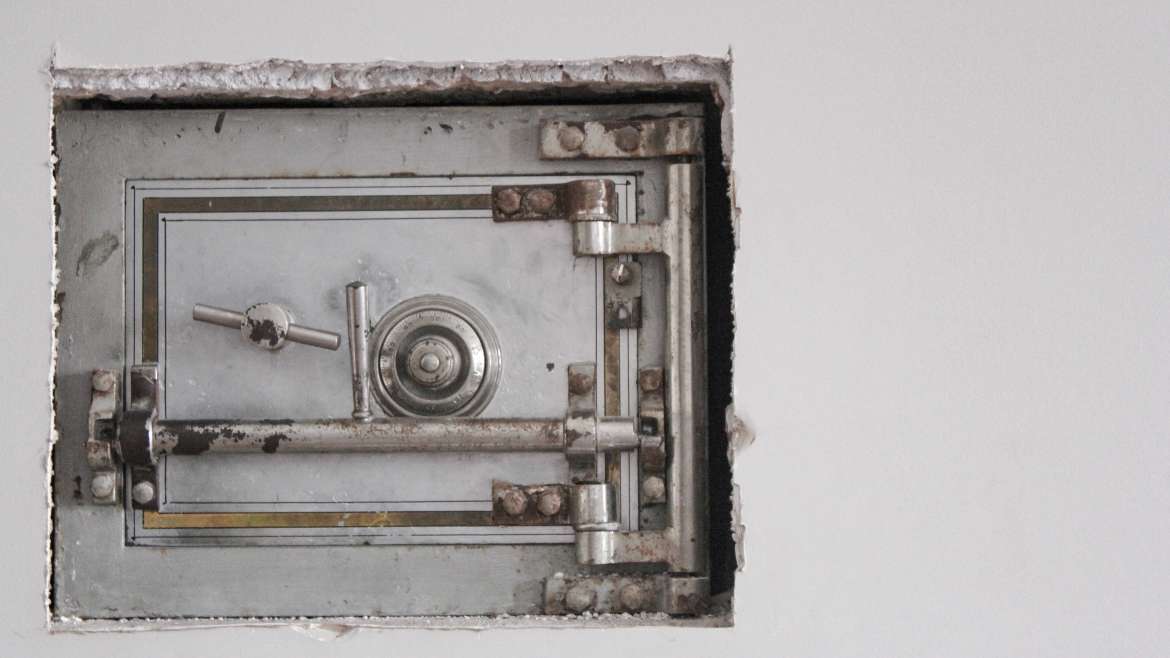
If your safe is a wall safe and your walls are thick enough, you can embed your safe in a wall. Please note, this isn’t an easy installation, so it’s recommended that you call in a professional to help you. An embedded safe is easy to hide, yet still easy to access. - Anchored to the floor
If you have a large safe and the wall that it will be against is not a concrete wall, you can instead anchor the safe to the floor so that it is still properly secured and easy to access. Just note, you will have to bend down to use it. - Hidden in the floor
If you have a concrete or cement floor and a small safe, it can be installed within the floor. However, like a hidden wall safe, whilst it is easy to hide, it must also be installed by a professional. You should also note that a floor safe is also more susceptible to the ingress of dust or water, which could have the potential to damage the lock. This should be a last resort.
Places to avoid installing a safe include:
- Locations near exterior doors
You want a safe to be away from potential entry and exit points for burglars. They will have a limited time to operate, so don’t make life easier for them by installing a safe near their getaway point. - Humid conditions
It’s not recommended to install an electric safe in a room with a high humidity. Humidity can be just as bad for the electrical workings of a safe as it can for the actual contents of the safe. Mechanical safes aren’t as susceptible to humidity.
How easy is it to break into your safe?
The good news is, breaking into a safe isn’t anywhere near as easy as it seems in films, where it can be a simple process that takes only a few seconds. Modern safes are designed to combat some of the old methods that have been shown on the big screen. Most methods of breaking into a safe require a lot of training and experience.
If a burglar can’t access your safe via the combination, they will then have to turn to destroying the safe. Don’t buy a safe that is made from thin metal. This will be easier to pry open or drill through. The harder and thicker the door, the harder it is to open. Hardened steel plates make safes very difficult to drill through, meaning time is not on a burglar’s side, even if they have quality tools.
To make sure your safe is secure, as advised above, ensure it is properly anchored. Burglars will often try to simply take the safe with them to give them more time to open it.
Do you have the key or code?
Be sure to have the key or key code to your safe handy. Never leave a code near to a safe, as this completely removes the safety element of the safe, rendering it void. If you don’t know the code, or don’t have a key, a safe is just as useless!
If you live in the West Midlands and would like to heighten your home security, you can arrange for a free security upgrade survey. Simply contact Gibb Locksmiths by calling 0121 353 3644.


